Livingston Brain Data
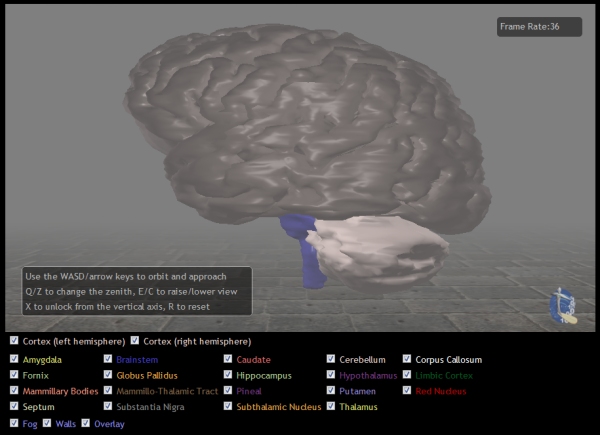
A WebGL demo using Robert B. Livingston's 0035 brain data from the 1970's.
WebGL Brain demo To view this demo, you'll need a
WebGL-enabled browser.
Click on the link or the screenshot above to go to the demo, it will take a while to load (the dataset contains 80,000 polygons and is about 21 Mbytes of XML).
The data shown here were acquired by Robert B. Livingston at UCSD in the 1970's. RBL had studied many brains using a process he called "cinemorphology": the tissue was infused with paraffin and successive layers were shaved off the block and photographed. He chose a particularly "average" specimen (#0035) to digitize by hand, producing contours like a topographic map, spaced about a millimeter apart. He also segmented the contours into the distinct anatomical structures shown in the demo. I've cleaned up the data a lot but it's essentially still the same coordinates RBL digitized 35 years ago.
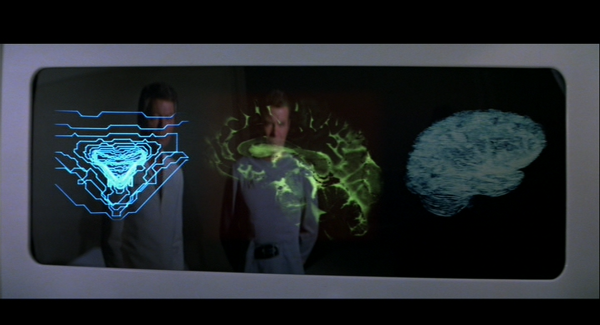
This is the same data that was used to create imagery of Spock's brain in Star Trek: The Motion Picture (about 99 minutes into the film):